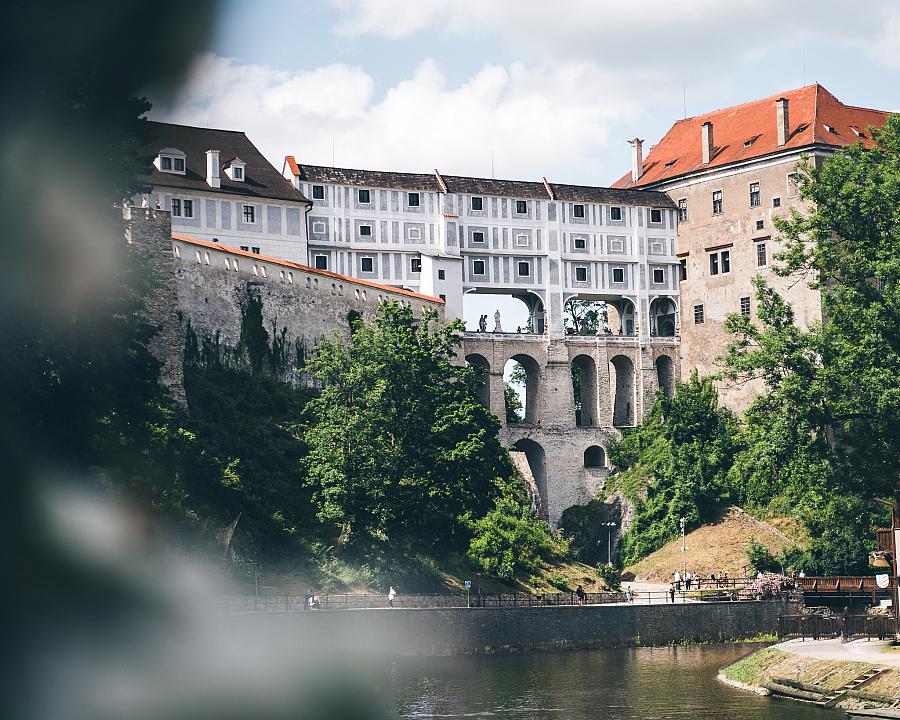
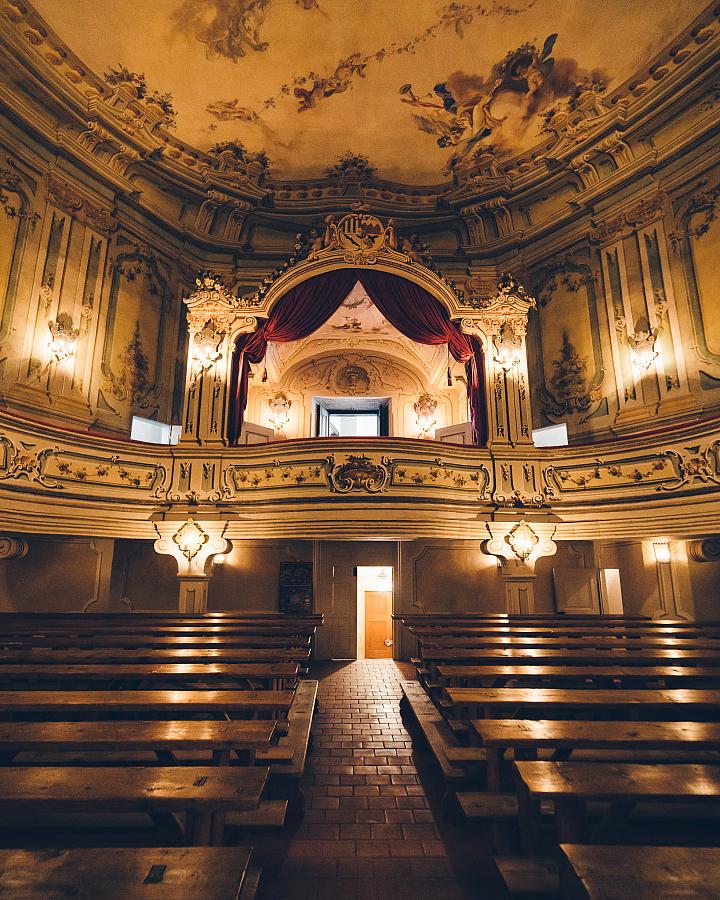
John Christian of Eggenberg, perhaps to please his art-loving wife, decided to build a theatre in the castle. Until then, it had been performed in the Masquerade Hall, but from 1686 Thalia (one of the ancient muses) had her own dignified temple. Immediately afterwards, he also began to build the Cloak Bridge, which was to connect the Masquerade Hall with the castle theatre and the picture gallery with the garden.
Discover the Baroque pearls of Český Krumlov
The labyrinth of narrow and mysterious medieval streets, proud Renaissance and Gothic houses, dignified monasteries and noble churches, formed into breathtaking picturesqueness by the meanders of the Vltava River, is crowned in Český Krumlov by a unique castle complex. It can be said that it is there that the Baroque left gems that you will hardly see anywhere else. Above all, one of the best preserved Baroque theatres in the world, the remarkable landmark of the Płasz Bridge and the Baroque castle garden, which were built as an extension of the theatre scene into the countryside.
1.
Renaissance and Baroque Apartments – Tour I.
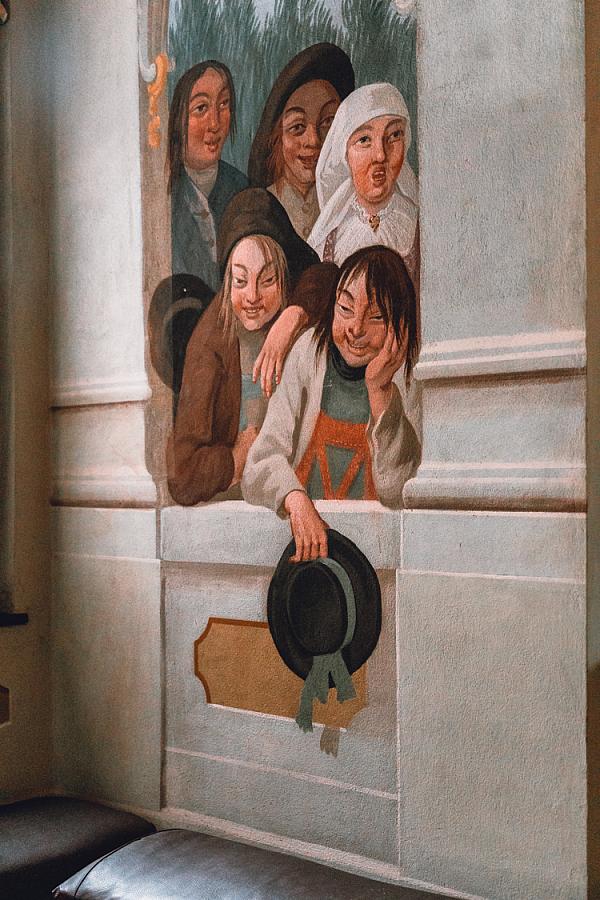
The tour of the Renaissance and Baroque Apartments (basic tour I.) at the Český Krumlov State Castle and Château offers a tour of the original historical castle interiors from the Renaissance and Baroque periods. The tour route also includes the Château chapel of St. George, the Eggenberg Hall with a "golden" carriage and the Masquerade Hall.
2.
Castle Museum
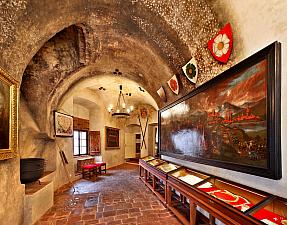
The Castle Museum in the grounds of Český Krumlov Castle and Château is the oldest preserved part of the Český Krumlov residence. It presents exhibits from the château's depositories and recalls the most important events related to the Rosenberg, Eggenberg and Schwarzenberg owners of the Krumlov estate.
3.
Cloak Bridge
The rugged Cloak Bridge, standing on pillars with arches supporting the bridge itself and two floors of covered corridors above it, is another unique Baroque feature of the château. Its brick railings are adorned with statues of saints, and walking its length is truly an uplifting experience. But the view from the outside is the most breathtaking. The bridge soars to dizzying heights and the three tiers of supporting pillars connected by arches alone are impressive. And up there, the covered corridors float like the buildings of a heavenly castle.
4.
Baroque Theatre
To enter the Baroque Theatre is to enter a time machine. The building is original, the orchestra pit, the stage and the whole complex stage machinery, hundreds of costumes, decorations and lighting fixtures have been preserved. Everything, thanks to careful renovation, shines like new. That is why the experience is so authentic. Part of the Baroque legacy is the archive of musical literature, which, of course, has been hungrily pounced upon by scholars. To see any Baroque opera in this very theatre is an experience that few can surpass.
5.
A stroll through the Baroque Garden
The Baroque Garden, which in the spirit of the Baroque style was itself a bit of a theatre full of optical sensations, effects, transparencies and hidden symbols, completes the trio of Baroque beauties of the castle with great dignity. In recent decades, its Baroque character has been substantially restored. It has three terraces, a magnificent cascading fountain decorated with statues of water deities, nymphs and animals. The imaginary icing on the cake is the picturesque late Baroque Bellaria summerhouse with its double spiral staircase, Baroque kitchen and sala terrena, as well as the unobtrusive but beautiful Rococo wooden gazebo serving as the Music Pavilion.
From the Masquerade Hall, Jan Kristián and his wife Marie Arnoštka could walk across the Mantle Bridge, where they paused for a moment to gaze at the twinkling city, to their box in the château theatre, and then make their way to the late soiree in the magically lit gardens, where the fountain murmured softly and the fragile strains of a Corelli sonata rang out from the Music Pavilion. Thanks to the well-conceived tours of Český Krumlov Castle and many occasional events, you can experience their feelings for yourself.
6.
Bellarie Summerhouse
The Bellarie Summer house in the castle garden was built in the early Baroque style at the end of the 17th century by Prince Jan Kristián of Eggenberg. It was rebuilt in its present form in the mid-18th century under the Duke of Krumlov, Josef Adam of Schwarzenberg, by the architect Andrea Altomonte, who gave it a Rococo look.
- sights
- suitable for children
- history
- arts